

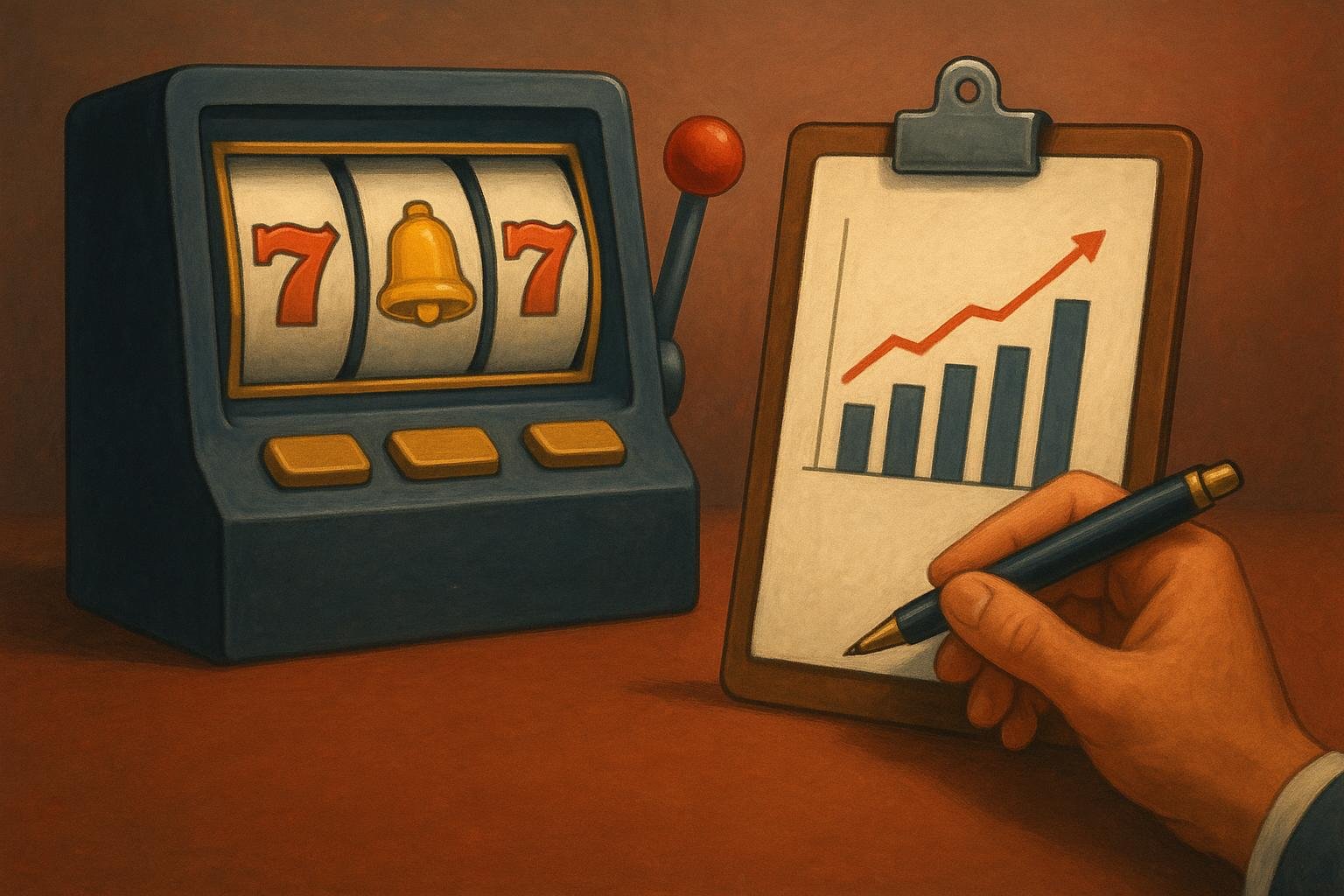
A slot’s hit frequency can sound like a simple measure of how often it pays. In practice, the phrase needs context: a “hit” might mean any result counted as a win, even one that returns less than the stake. Knowing that distinction helps you read game information without mistaking frequent small payouts for a better chance of finishing ahead.
Hit frequency is not a promise about what will happen in your next session. It describes an expected pattern over many game rounds, where the result of an individual spin remains uncertain.
What does slot hit frequency mean?
Hit frequency generally refers to how often a game produces a result classified as a win, expressed as a proportion or percentage. The exact definition can vary between games and information sources. Check the game’s own help or rules to see what it counts as a win and whether the figure is provided at all.
Imagine, as a hypothetical example, that a game reports a hit frequency of one winning result in every five spins on average. That would not mean a win arrives reliably every fifth spin. Several spins might produce wins close together, followed by a longer stretch without one. Nor does the figure, by itself, tell you how much any winning result returns.
A hit is not necessarily a profit
Suppose a spin costs $1 and a result returns 40 cents. The game may classify that result as a win, but the player is still down 60 cents for that spin. A game that records many small returns can therefore feel active without those returns covering the cost of play.
This is why hit frequency should not be read as a measure of profitability. Before drawing conclusions, look for the game’s definitions, paytable and other published information. For a broader introduction to common slot terms, see our guide to slot game terminology.
How it differs from RTP and volatility
RTP describes a different measure
Return to player, or RTP, is a theoretical percentage describing how much of the total wagered amount a game is designed to return over a very large number of plays. It is not a forecast of what one person will receive in a short session. A hit-frequency figure tells you about the rate of winning outcomes as defined by the game; RTP concerns the overall return represented by those outcomes over time.
Neither measure guarantees an individual result. If a game provides more than one RTP setting or version, the information shown for the version you are playing matters. Read the game rules rather than assuming every version shares the same details.
Volatility describes the feel of results
Volatility, sometimes called variance, is a general way to describe how uneven a game’s results may be. A higher-volatility game may have less frequent but more variable outcomes; a lower-volatility game may produce more frequent, smaller outcomes. These are broad descriptions, not reliable predictions for a particular session. Hit frequency and volatility are related ideas, but they are not interchangeable.
For a practical overview of other factors to check before choosing a slot, read factors to consider while playing slots online.
What to check before you play
- Find the definition: Check whether “hit” means any payout, a payout above the stake, or something else.
- Look for game-specific information: Use the paytable and rules for the exact game version, not assumptions based on a similar title.
- Keep the time scale in mind: A long-run average does not set a schedule for wins in a short session.
- Separate entertainment from expectations: Frequent results do not mean a game is likely to return more than it costs to play.
- Set a limit in advance: Decide how much time and money you are comfortable spending, and stop when that limit is reached.
Can free play tell you the hit frequency?
Free-play mode can help you learn the controls, identify the paytable and see how a game presents its features. It cannot establish what will happen in later paid play, and a short sample is not enough to confirm a long-run pattern. Our guide to free slot games explains what practice play can and cannot offer.
The useful takeaway is simple: treat hit frequency as one piece of game information, not a promise of regular profit or a prediction for your next spins. Check how the game defines a hit, consider RTP and volatility separately, and make your spending decision based on a firm personal limit—not on the expectation that a payout is due.